Van Cortlandt Park East instead. Pop up walk: Jan. 13th, Van Cortlandt Park, Bronx…Bronx Forest walk POSTPONED
Join us for a pop-up walk in the Forest Park, Queens, Saturday January 6th!
Join Journei Bimwala, Community Partnership Coordinator for the NYMS & artist-in-residence at the Bronx River Alliance, and Ethan Crenson, NYMS vice-president & newsletter editor, for a winter mushroom pop-up walk in the Bronx Forest, Saturday January 13th!
This meeting will take place on Monday from 6.30 to 8.30 at Ethan Crenson's apartment in Park Slope.
Attendees can of course arrive later and leave earlier.
Please bring any interesting specimens regardless of whether you have identified them or not, and check out what others have found.
In person ID meetings are a great way of developing your hands-on identification skills and dipping your toes into microscopy!
There will be microscopes and lots of books.
We encourage you to use - it's a great way to keep track of your finds, and you will be able to participate in these two NYMS projects:
.
.
.
Next Monday's ID meeting will be happening online.
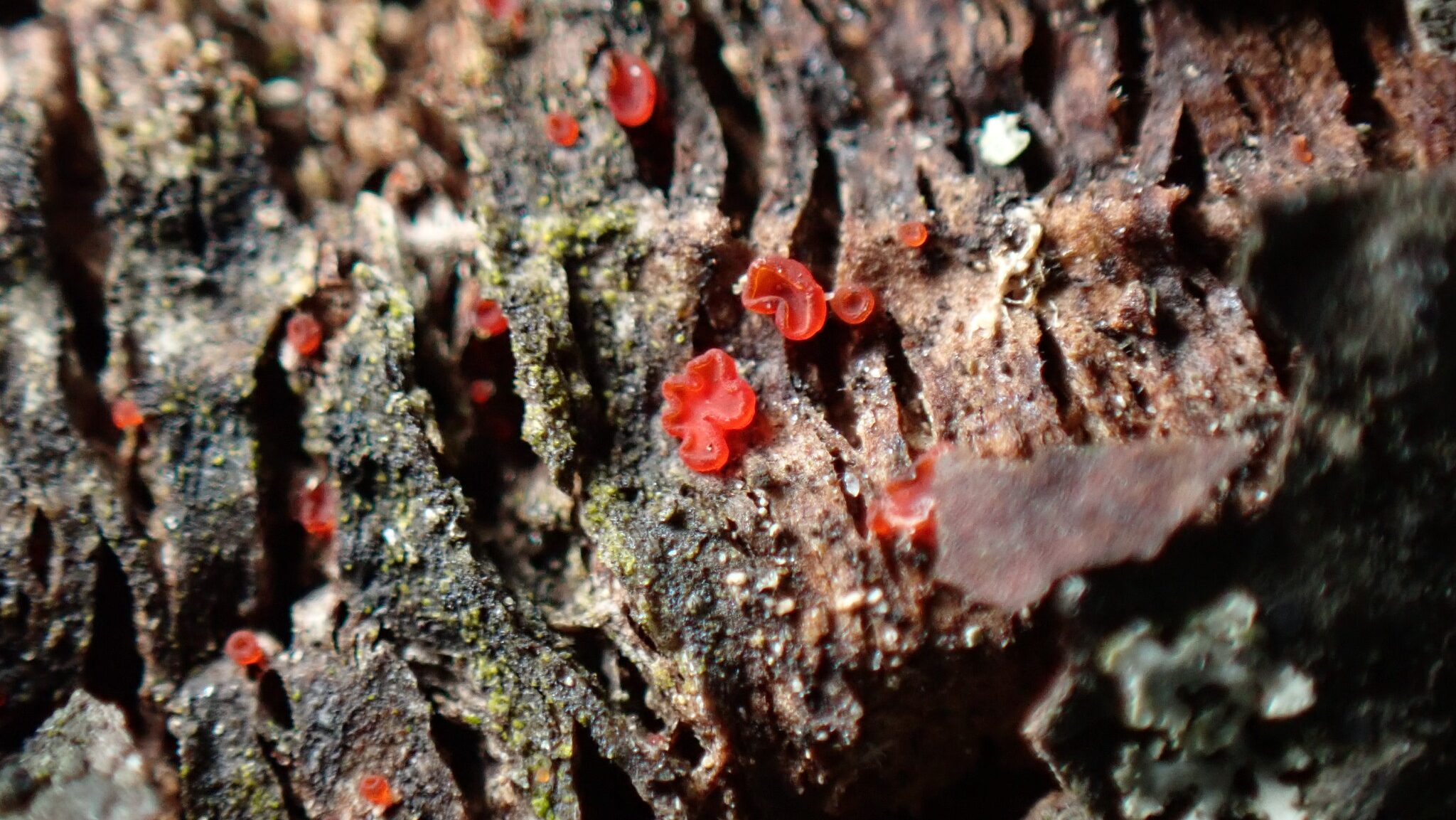
Since there are fewer fungi to be found this time of year, we'll be diving deeper into families of fungi that a lot of people are interested in. It's stick season, so this Monday the spotlight is on ascomycetes, hosted and moderated by the club's own expert Ethan Crenson. To get you in the mood, check out Ethan's charming Instagram takeover from the other week.
Did you know that ascos account for a whopping 75% of the fungal kingdom, leaving fleshy fungi in the dust? They're as large as morels, as weird as Dead Man's Fingers and as tiny as the tiniest Patellaria. Bring your most exciting or confounding asco observations and let's learn about them together! We might well have time left over to look at other observations too.
As always, we encourage you to use iNaturalist to share your observations - it's a great way to keep track of your finds, and you will be able to participate in these two NYMS projects:
Fungi of New York City
Fungi Beyond New York City
Slime Molds of New York City
If you're not using iNaturalist, try to have images on your computer that you can share.
Either way, it's important to document your finds with clear pictures, showing as many details as possible.
All members are welcome to join - especially new members! We will try to make it as easy as possible for everyone and are eager to assist, so please don't hesitate to get in touch if you have any questions.
https://us02web.zoom.us/j/87558669700?pwd=cmpWck8rODA1dzlLMHB4L0p4SlZodz09
Meeting ID: 875 5866 9700
Passcode: 421468
This talk will discuss the common edible chanterelle mushrooms and their relatives. Despite their appearance, chanterelles are close relatives of a wide assortment of fungi with diverse forms that play many different roles in our ecosystems. How is it that such an oddball assortment of fungi are all closely related? How many species of chanterelles grow in North America? How can you tell species apart from each other, and from lookalikes? We will cover these topics and more!
Rachel Swenie is a mycologist with expertise in the macrofungi of eastern North America. She earned her PhD in Ecology and Evolutionary Biology from the University of Tennessee and is currently a Farlow Fellow at Harvard University.
Join us for a pop-up walk in the Forest Park, Queens, Saturday January 6th!
Come learn how to make tempeh from tempeh expert Barry Schwartz. In an one-hour workshop, Barry will guide you through the process of fermenting soybeans with […]
Next Monday's ID meeting will take place from 6.30 to 8.30 at Paul Sadowski's apartment in Chelsea, Manhattan.
Attendees can of course arrive later and leave earlier.
Please bring any interesting specimens regardless of whether you have identified them or not, and check out what others have found.
In person ID meetings are a great way of developing your hands-on identification skills and dipping your toes into microscopy!
We will be headed to Long Pond Park, Staten Island this Sunday February 4th! Come along for this Staten Island winter walk.
Next Monday's ID meeting will be happening online. Since there are fewer fungi to be found this time of year, we'll be diving deeper into families […]
Most fungi are completely invisible to humans. While we love to admire beautiful mushrooms and other large fruiting bodies in the forest, entire communities of cryptic and microscopic fungi are living and growing under our feet. Single-celled fungi, also known as yeasts, are among these cryptic fungi. Because they are single-celled, we can't see them with our own eyes, and yet they exist in almost all environments on Earth. The single-celled growth form evolved several times from hyphal ancestors and is common worldwide, but yeasts' roles in ecosystems are often mysterious.
In this talk, I will introduce you to the wonderful world of naturally-occurring yeasts; giving some historic context on how humans have been interacting with yeasts for thousands of years, before discussing what we do and don't know about yeast ecology in nature. Then I'll discuss my own work with yeasts: I work with yeasts in several natural New England habitats, including temperate forests and carnivorous plants. I am working to expand our knowledge of yeast ecology and evolution by focusing on how yeasts interact with other living things in nature. With this talk, I hope to give audience members a new appreciation for the mysterious and intriguing invisible fungal diversity they encounter every day.
We will be headed to Long Pond Park, Staten Island this Sunday February 4th! Come along for this Staten Island winter walk.

You may choose to prevent this website from aggregating and analyzing the actions you take here. Doing so will protect your privacy, but will also prevent the owner from learning from your actions and creating a better experience for you and other users.